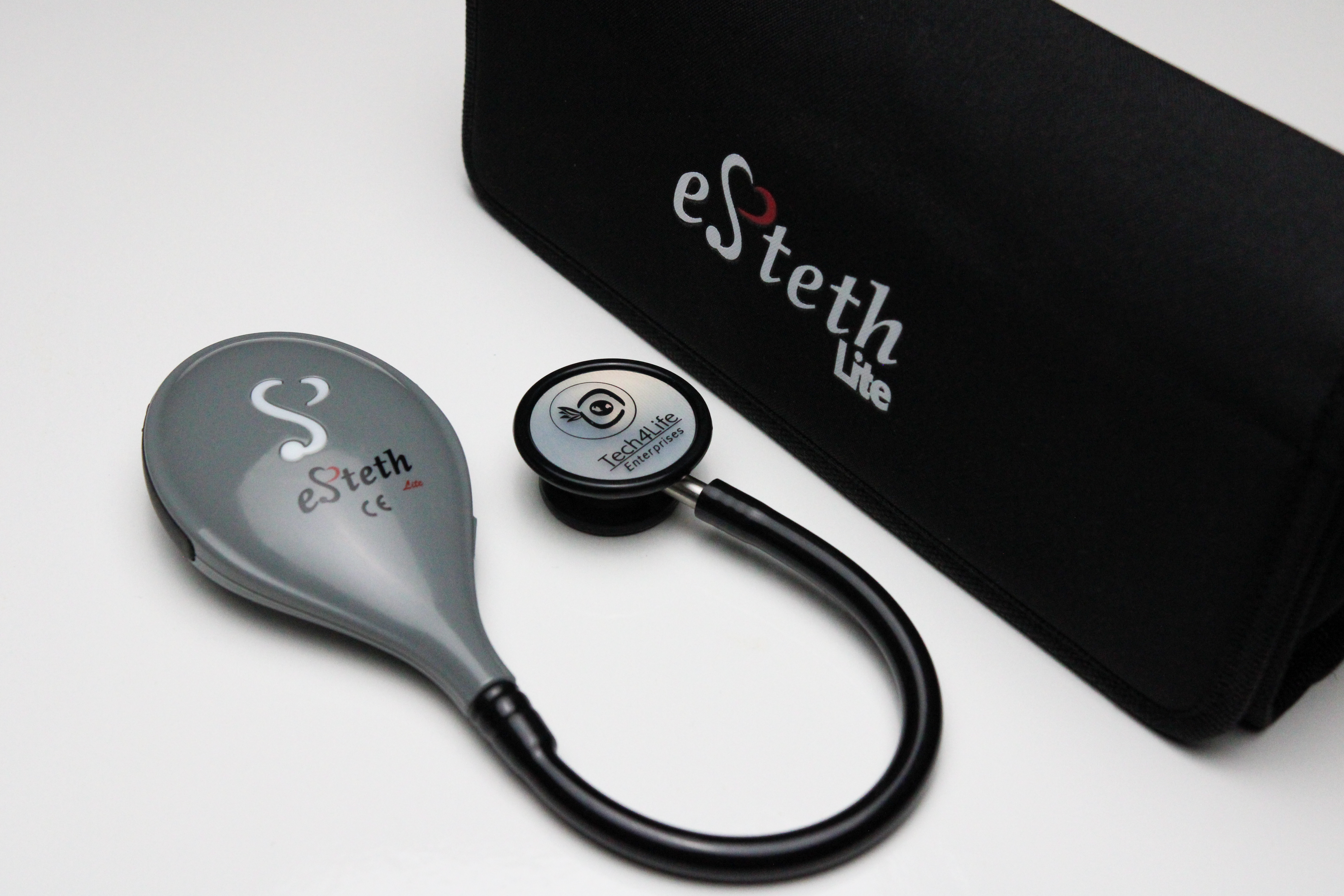

Stethoscopes are possibly the most common diagnostic instruments. Nearly any doctor or health care professional can be seen wearing one around their neck, and the instrument is a symbol of medicine as a whole. But who and why invented the stethoscope? When was it first used, and why is it necessary?
Firstly, the stethoscope enables health care workers to hear the internal sounds of human and animal bodies via a disc-like resonator and two earpieces. The noises created by the intestines, lungs, heart, and other organs can provide doctors with essential indicators. The process of auscultation is usually among the first tests that doctors will perform on their patients, making the stethoscope an essential tool in the medical world.
Stethoscope Beginnings
In the 19th century, physicians utilized techniques such as immediate auscultation and percussion to hear and analyze internal sounds. However, these methods had many flaws. Immediate auscultation required doctors to lean in with their ear and listen to the internal sounds directly. However, there was no way to amplify the sound. Plus, the method was inconvenient for both doctors and patients. Moreover, it was unreliable. The technique did not allow physicians to hear the full spectrum of internal sounds.
Fortunately, Rene Laënnec, a physician and musician from France, invented a new device for auscultation. In September 1816, the 35-year-old doctor was inspired to create the stethoscope when he saw some children playing on the streets of Paris. The children were placing their ears on a long block of wood. They scratched it with a pin, and the woodblock amplified the vibrations and noises. Laënnec wanted to try the same method in his medical practices.
By the end of the year, Laënnec went to examine a female patient with heart problems. Instead of trying immediate auscultation, he drew inspiration from the acoustic phenomenon he had witnessed earlier. He quickly rolled up a piece of paper and set it against the patient’s chest. The paper functioned like an ear trumpet. The result surprised Laënnec because it allowed him to hear the woman’s heartbeats clearly and accurately.

The Modern Stethoscope
During the following three years, the French physician experimented with several designs and materials. Laënnec used his invention on pneumonia patients at the Necker-Enfants Malades Hospital in Paris. He achieved the best results with a hollow wooden tube. Of course, the instrument was monaural. It sported a length of 25 cm and a diameter of 3.5 cm. Additionally, Laënnec created the wooden block out of several parts for easy assembly and portability. For heart patients, he would attach a chest piece to the tube. That allowed him to further amplify the sound. Furthermore, the doctor analyzed the diagnoses he had made with the new invention. He discovered that they were proven through autopsies.
While Laënnec’s wooden stethoscopes were a major breakthrough in medicine, many inventors modified his design in the next few decades. In the 1850s, the instrument saw significant improvements with Arthur Leared’s invention of the binaural stethoscope. What’s more, George Cammann perfected the device’s design for commercial production. His invention featured two earpieces and flexible tubing. It became the standard for stethoscopes as we know them today.

New Advancements
In the 20th century, the stethoscope saw numerous developments. Namely, manufacturers and inventors worked to improve the functionality of the instruments. Inventors like Harvard Medical School professor David Littmann utilized advanced components and materials to reduce external noise and improve acoustic sound quality.
Aside from acoustic stethoscopes, technology allowed inventors to create other types. Electronic stethoscopes were invented as a way to boost low sound levels. Doctors can use them wirelessly. They even offer options for recording, signal enhancement, noise reduction, as well as visual output. The 2000s saw the development of computer software. This further improved the use of electronic stethoscopes and enabled them to be utilized in telemedicine.
Another new advancement was the invention of a 3D-printed stethoscope in 2015.
Final Thoughts
Currently, stethoscopes are made in a rich range of styles and designs. They can suit nearly any field of medicine, and they have progressed a lot from Rene Laënnec’s early invention.
Yet, some experts believe that the 200-year-old devices are becoming obsolete. It’s possible that new high-tech gadgets, like pocket scanners and smartphone apps for heart analysis, could yield better results. Still, stethoscopes are quick, safe, and convenient. They are the go-to instruments for GP check-ups and especially for the examinations of pregnant women. Stethoscopes are also essential for prescribing heart medication, checking the blood pressure, assessing the recovery stages of patients after surgery, and even for the declaration of death.