
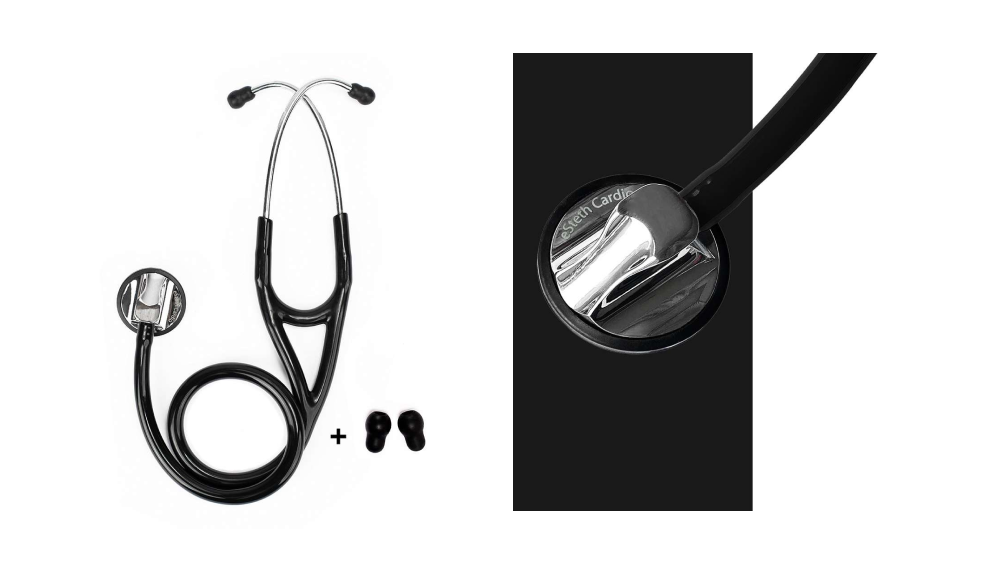
A stethoscope is a lifesaving medical tool that has been used in healthcare for nearly 200 years. The 10 uses of a stethoscope extend beyond simply listening to the heart and lungs. Doctors and nurses use this essential medical device to assess heart sounds, blood pressure, breathing patterns, bowel sounds, and other important body functions. Modern stethoscopes also offer advanced features such as noise cancellation, sound amplification, and wireless technology for recording and sharing heart sounds with other specialists.
Over years, physicians and medical professionals have been using stethoscopes for various applications. Let’s get onto the most crucial uses of a stethoscope.
10 Uses of a Stethoscope
-
Measure Liver Size
It might seem unbelievable to many, but a stethoscope can detect the size of your liver. It can do so by measuring the vertical length of the liver from the nipple line. The device will produce a faint sound than usual when a finger is over the liver. By marking these points and calculating the length, doctors can estimate the liver size.
-
Calculate Blood Pressure
Doctors can attach a blood pressure cuff to the arm and then hear a heartbeat using a stethoscope. It can help study systolic pressure and diastolic pressure.
-
Determine Lung Sounds
As the stethoscope can detect heartbeats, it can check if patient’s heart is beating accurately. By understanding the standard rate of the patient’s beats and then examining it during sickness, a doctor can easily identify breathing patterns and if there is any lung inflammation due to air blockages.
-
Detect Heart Sounds
One of the key 10 uses of a stethoscope is to detect and assess heart sounds. A stethoscope is an essential medical device used to listen to heartbeats and identify abnormal sounds, such as heart murmurs. Doctors can assess the pulmonic, tricuspid, aortic, and mitral areas to evaluate heart function and identify potential abnormalities, helping them determine the appropriate diagnosis and treatment.
-
Measure Bowel Sounds
A stethoscope makes it easy to check irregular bowel sounds, especially crucial in bowel blockages or similar cases. Loud bubbling or gurgling sounds can be avoided with a thorough assessment and patient care.
-
Detect Bruits
Bruit is a soft whooshing sound that occurs in the blood when passing through the artery. The sound indicates that the artery has narrowed, which causes a disrupted flow. This condition is detected in the umbilicus, kidneys, neck, femoral, and temporal arteries.
-
Check Congestive Heart Failure
If the heart and lungs are making inappropriate sounds, then it might be due to congestive heart failure. Doctors use a stethoscope to assess heart and lung sounds and identify signs that may require further evaluation. the cause of irregular heartbeats and diagnose the condition.
-
Detect Hearing Impairments
In a case where a patient’s hearing is impaired, doctors can allow them to use a stethoscope. Moreover, doctors can use the chest piece as a hearing aid and talk through it.
-
Keep Track of Body Sounds
A stethoscope can amplify important body sounds, allowing doctors to monitor patients and compare findings during routine examinations of each part of the body. Doctors can use them daily to monitor and see if a patient is doing well. They first analyse the reports, cross-compare them with regular reports and check if the situation has deteriorated or has become stable.
-
Check Recovery Rate from Surgery
The anaesthesia used during surgical treatment may cause slow bowel movements. Therefore, after surgery, a patient often has less appetite and may be unsettled. A doctor uses a stethoscope to determine the patient’s state of healing by listening to stomach sounds.
Conclusion:
Now that you have understood the 10 uses of a stethoscope, you can see how this essential medical device supports different aspects of patient examination.
Tech4Life Enterprises brings state-of-the-art telemedicine solutions and point-of-care devices such as eSteth Stethoscopes in a comprehensive range, unique design, and better quality sound for accurate diagnosis.
- Flexible – flexible PVC tubing that is 32 inches long, making it easy to move around patients during the examination.
- Clear sound frequency – The chest piece amplifies sound so you can hear high and low frequencies better.
- Added features – comes with a non-chill ring, extra earpieces, and an ultra-sensitive chest piece to monitor amplified heart and lung sounds.
- Durable – made of stainless steel for greater durability and comfort.
If you’re a doctor, nurse, or anyone practicing in the field, a stethoscope is a must-have for your job and your patient’s well-being. Investing in the eSteth stethoscope makes perfect sense as it comes with a 5-year warranty and superb features.
Dr. Shariq Khoja– CEO, Tech4Life Enterprises
drshariqkhoja@tech4lifeenterprises.com